
Suggestions for prevention and control of H9 avian influenza this winter
Publish time:2025-02-18 Author:華南生物 Column:Tech Features
H9 avian influenza has been a key disease for prevention and control in poultry farming for many years. However, due to the susceptibility of orthomyxovirus to antigenic changes and the low protection rate of inactivated vaccines, it is prone to occur every winter, and even some chicken flocks may still develop the disease after immunization. The mortality rate of diseased chicken flocks is 10-30%, which is related to the severity of mixed infection. The main symptoms include a large amount of mucus in the trachea and bronchi, cloudy and exudative air sacs, and black lungs. For the prevention and control of H9, in addition to ensuring its own biological safety and feeding management, it is also necessary to choose the appropriate vaccine. So it is very necessary to grasp the trend of H9 popularity.
1. The following is an introduction to the epidemiological investigation of H9.
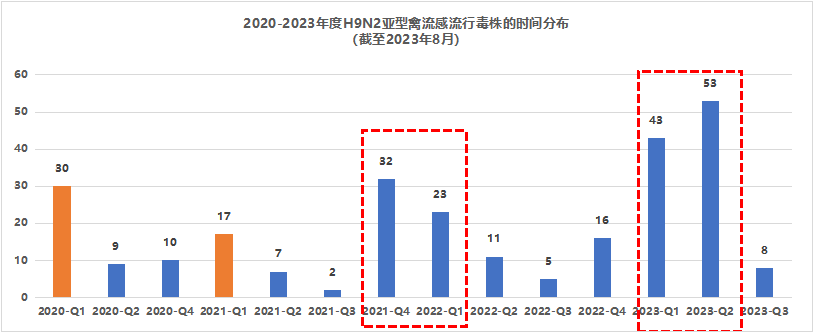
1.1. The winter and spring seasons are the high incidence periods for H9 each year.
Tracking the data from 2020 to 2023, it is evident that the incidence of H9 has a tendency, mainly concentrated in the winter and spring seasons each year.
1.2. H9-4.2.5 branch is still the main prevalent genotype this year.
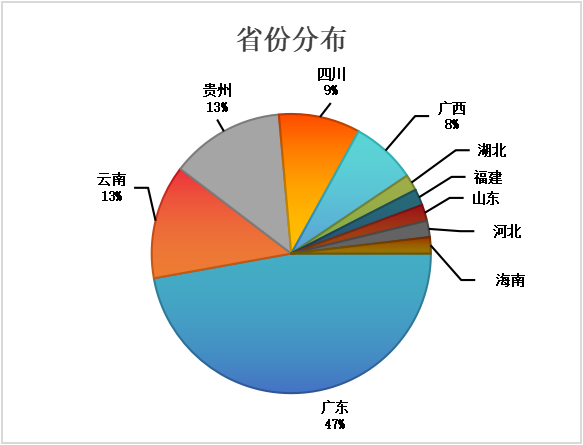
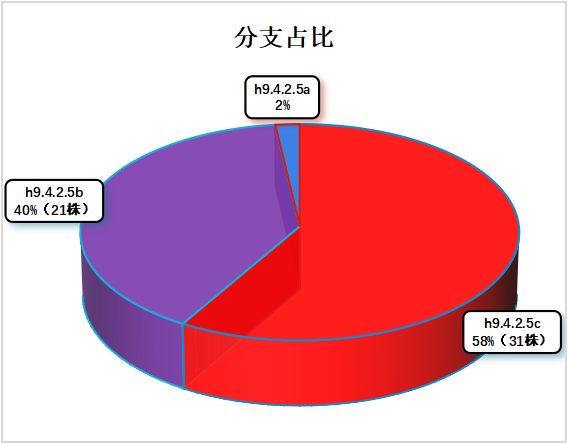
The HA sequencing of 53 H9 epidemic strains isolated from January to September 2023 indicates that H9-4.2.5 is the main epidemic genotype this year. And it can be further divided into three sub branches, 4.2.5a/b/c, internally. Among them, the c branch accounts for 58%, the b branch accounts for 40%, and the a branch accounts for 2%. It is worth noting that the detection rate of branch B has significantly increased this year, especially among yellow feathered broiler chickens in southern regions (Guangdong, Guangxi, Hainan).
1.3. There are significant antigenic differences between different strains of avian influenza H9-4.2.5a/b/c.
Antigenicity analysis was conducted on this year's isolated strain 4.2.5a/b/c and vaccine strain. Serum cross validation results showed that the difference in HI antibody titers could reach 8-32 times, especially with more severe differentiation of b and c sub branches this year. The results of laboratory virus attack protection show that some H9 vaccines on the market have loopholes in their protection rates against different sub branches of H9. Reminder: To effectively prevent and control H9 avian influenza this year, it is necessary to use the appropriate vaccine.
2. Suggestions for the prevention and control of H9 avian influenza this year:
2.1 Biosafety is essential, and measures such as strengthening disinfection of breeding farms and strict control of empty house time should be taken. Control the source of infection and cut off transmission routes.
2.2. Strengthen on-site feeding management. H9 is an environmental disease. Chickens are easily induced after cold stress. It is important to pay attention to the temperature, moderation, and ventilation inside the house during winter to reduce stress. At the same time, regularly use multidimensional, transfer factor, and other drugs to enhance resistance.
2.3. Tracking H9 antibody data every 2-3 months, timely vaccination with inactivated vaccines, and selecting the appropriate type of inactivated vaccine are crucial for controlling H9.
